

What we know about weight, hormones, and health
Weight regulation in women is influenced by a complex interaction of hormones, metabolic processes, and life stages such as puberty, pregnancy, and menopause. In addition, certain health conditions can further impact weight and fertility.

- Polyendocrine Metabolic Ovarian Syndrome (PMOS) is a metabolic and endocrine condition that affects hormone balance and insulin sensitivity
- Hormonal changes across life stages, particularly changes in estrogen levels, can influence fat distribution and weight regulation
- These factors may also impact fertility and cause long‑term health risks
Living with obesity can affect health in many ways
Overtime, obesity can impact both physical health and overall quality of life in women.
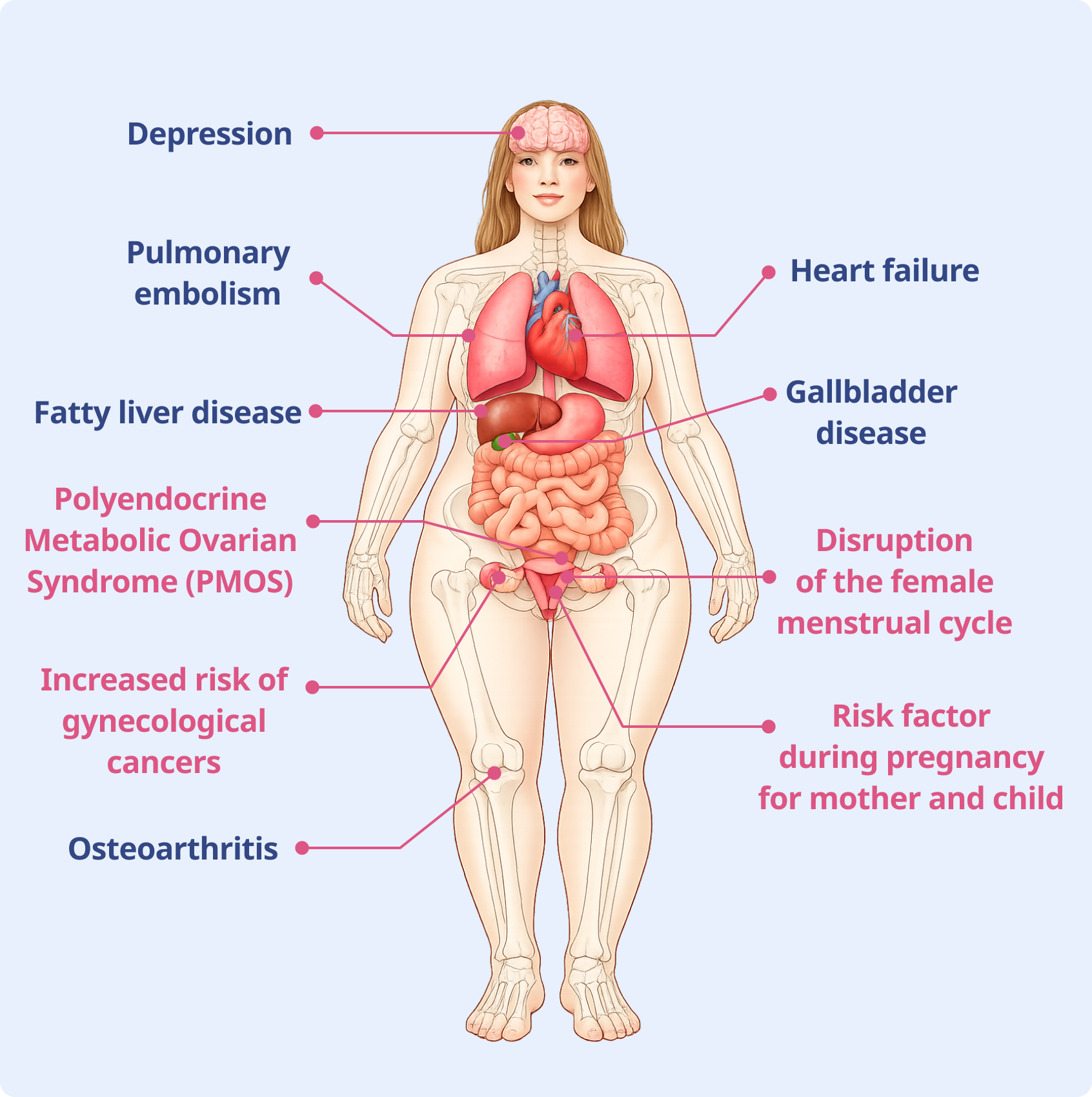
Why managing weight can feel different for women?
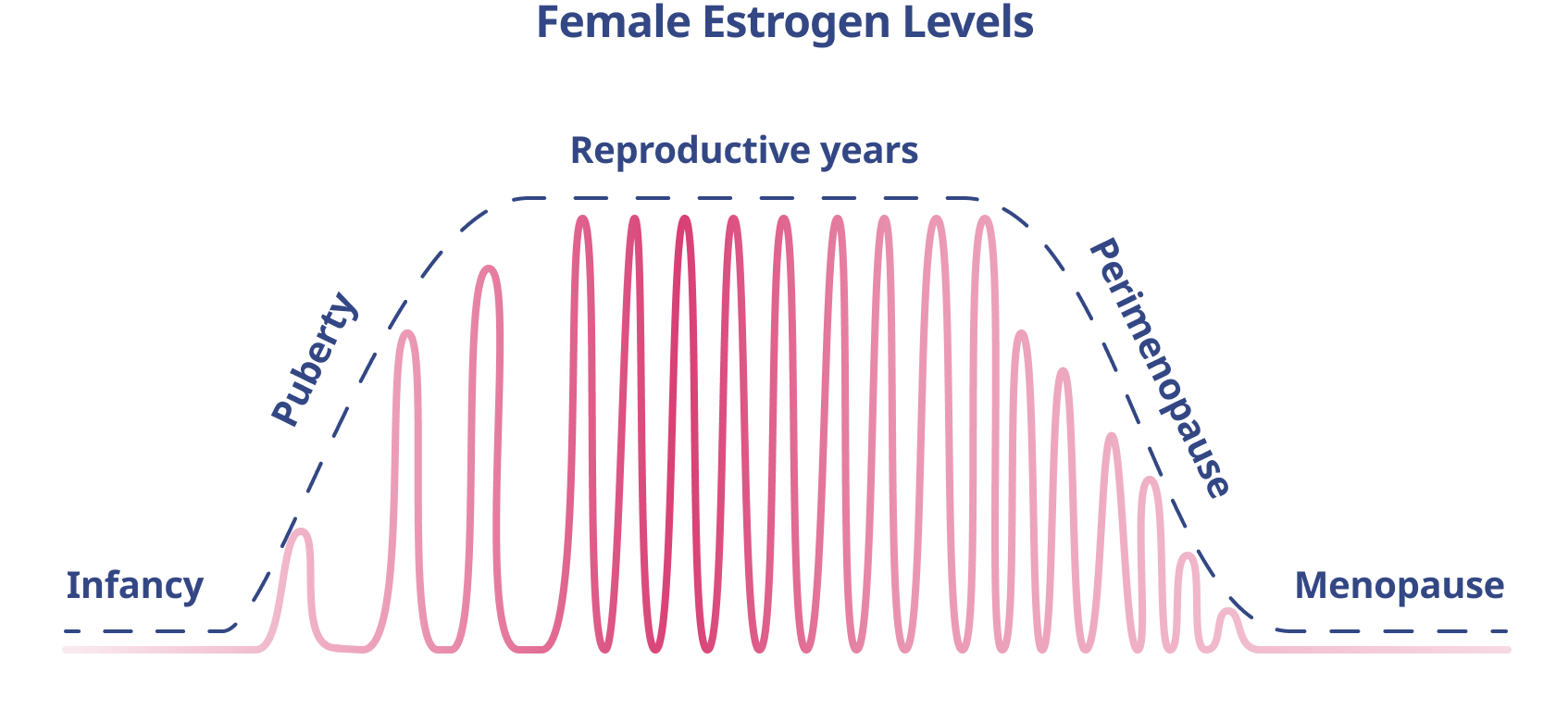
Your body undergoes natural changes across different stages of life, each influencing weight and health in its own way:
- Puberty - Rising estrogen supports growth and development and can influence early fat distribution
- Menstrual cycles - Monthly hormonal fluctuations may affect appetite, energy levels, and fluid retention
- Pregnancy - The body stores energy to support fetal growth, often leading to weight gain
- Perimenopause and menopause - Declining estrogen alters metabolism and fat storage patterns
These natural changes can make managing weight more challenging. Hence talk to an expert and learn more about your body.
Why estrogen matters for weight and metabolism?
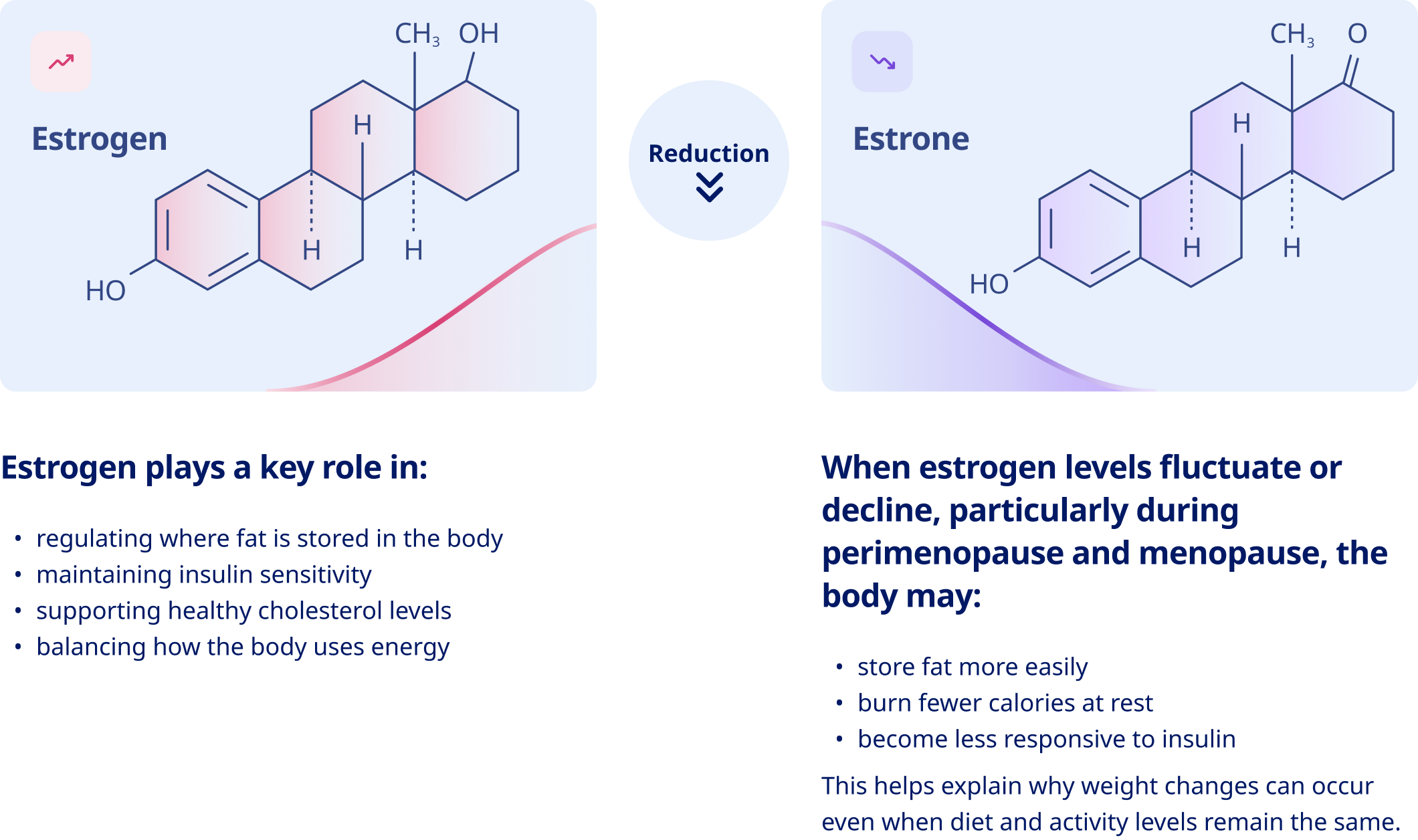
Why managing weight can be harder during menopause?
Menopause brings natural hormonal changes. A drop in estrogen can affect how the body stores fat and manages weight. During menopause,
- Fat shifts to the abdomen
After menopause, fat is more likely to collect around the waist. This type of fat is linked to higher risk of heart disease and type 2 diabetes. - Insulin resistance increases
Lower estrogen levels can reduce how well the body responds to insulin, raising blood sugar levels and encouraging abdominal fat storage - Risk of cardiovascular diseases is higher
Loss of estrogen after menopause leads to higher cholesterol, blood pressure, and fat distribution which increase long‑term health risk. During menopause, women are two to six times more likely to develop cardiovascular disease due to these combined changes.
Small steps can make a big difference. Talk to a doctor and get support that’s right for you.
Supporting your health starts with managing weight
Weight changes aren’t always in your control. But with the right support, managing weight and reducing health risks is possible.



References:
- Mirakind. Normal estrogen levels. Available from: https://mirakind.org/normal-estrogen-levels/
- Meu Peso Minha Jornada. Menopause and obesity. Available from: https://www.meupesominhajornada.com.br/menopausa-e-obesidade.html
- Novo Nordisk. Obesity and menopause. Available from: https://pro.novonordisk.com/disease-area/obesity/obesity-and-menopause.html
- The Hindu. Rising obesity among Indian women calls for science‑based, community‑ and lifecycle‑oriented care, study finds. Available from: https://www.thehindu.com/sci-tech/health/rising-obesity-among-indian-women-calls-for-science-based-…
- India Today. Obesity in Indian women is rising: AIIMS doctors warn of serious health risks. Available from: https://www.indiatoday.in/health/story/obesity-in-indian-women-is-rising-overweight-study-analysis-…
- Mohan D, Pradeepa R, et al. High prevalence of metabolic obesity in India: the ICMR‑INDIAB national study. 2025;161(5):461–472.
- World Obesity Federation. India country profile. Available from: https://data.worldobesity.org/country/india-95/ (Accessed 27 Feb 2026).
- Mishra S, Gupta R, Sinha A, et al. Prevalence and determinants of obesity among women of reproductive age in India: a population‑based study. 2023;23:689. Available from: https://link.springer.com/article/10.1186/s12905-023-02869-0
- Ganie MA, Rashid F, Zargar AH, et al. Prevalence, phenotypes, and comorbidities of polycystic ovary syndrome among Indian women. 2024;7(6):e2415233. Available from: https://jamanetwork.com/journals/jamanetworkopen/fullarticle/2825233
- Ganie MA, et al. Review of polycystic ovary syndrome prevalence in the Indian population. 2024;23(10):1–5. Available from: https://www.iosrjournals.org/iosr-jdms/papers/Vol23-issue10/Ser-11/A2310110105.pdf