
Go to the page content

  Person/s shown are models, not actual patient.


Breaking down what obesity means

Breaking down Obesity

Obesity is often misunderstood as a simple result of eating too much or moving too little. It is a complex medical condition influenced by biology, hormones, genetics, environment, and behavior.

Understanding the science behind obesity can help explain why managing weight is challenging, and why support matters.

What is obesity?

Obesity is a medical condition characterized by an excess amount of body fat that can affect overall health. It is recognized as a chronic disease and is associated with an increased risk of several health conditions.

Bigger picture


Obesity is not just about body weight. It can affect how the body regulates energy, hormones, metabolism, and appetite, and it often requires long‑term management rather than short‑term solutions.

What causes obesity?

Obesity does not have a single cause. It is influenced by a combination of genetic, environmental, and behavioural factors that can affect how the body gains and stores weight.

The causes of obesity are complex and can vary from person to person:

Biology and genetics

Small genetic differences can influence how the body stores fat, regulates appetite, and uses energy. Some people may be biologically more prone to weight gain than others.

Hormones

Hormones play a key role in appetite control, fat storage, and metabolism. Changes in hormonal balance including those related to stress, sleep, or life stages can make weight management more difficult.

Metabolism

Metabolism determines how the body converts food into energy. In people living with obesity, metabolic processes may adapt over time, making weight loss harder to maintain.

Environment and lifestyle

Daily routines, food availability, work patterns, and physical activity levels all influence weight. These factors often interact with biology rather than acting alone.

Stress, sleep, and medications

Chronic stress, poor sleep quality, and certain medications can affect hunger hormones and energy balance, contributing to weight gain over time.


Obesity develops over time due to these overlapping factors. This is why managing weight can be challenging and often requires a personalised, long-term approach.

Understanding how obesity is measured

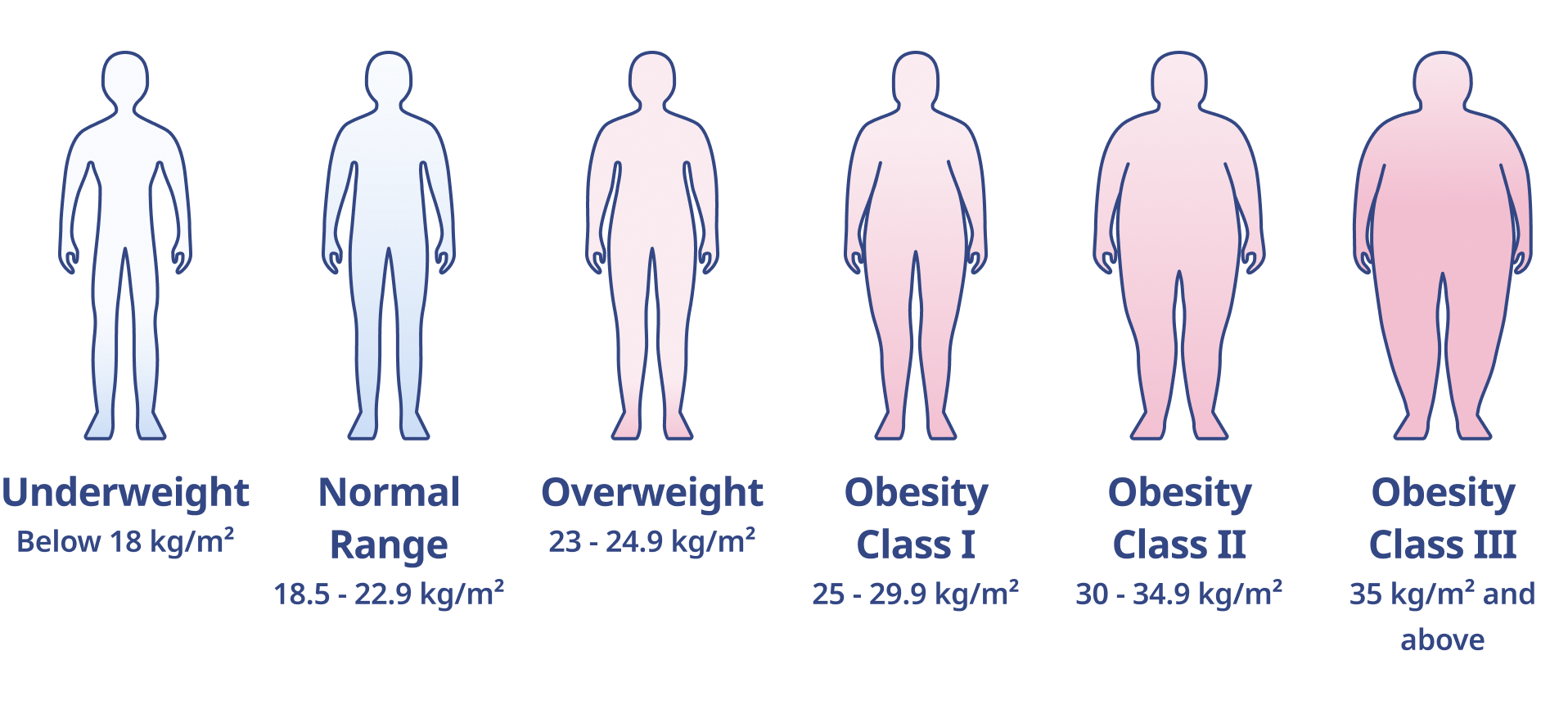
To determine if you might be living with obesity, it is important to consult a doctor for an accurate assessment. One commonly used screening tool is the Body Mass Index (BMI).

BMI is a simple calculation based on your height and weight. It helps classify weight status in adults and gives an initial indication of whether a person may be underweight, within a healthy range, overweight, or living with obesity.

Obesity is measured


BMI is a useful starting point, but it does not provide a complete picture of health. A healthcare professional may consider additional factors when assessing obesity.
This is as per the ESI Clinical Practice Guideline Recommendation.

Is obesity a disease?

Obesity is considered a long‑term condition rather than a short‑term problem.
This means:
• Weight management often requires ongoing care
• Setbacks or weight regain are common
• Long‑term strategies are more effective than quick fixes


How obesity can affect your health?


Living with obesity can increase the risk of several health conditions, including heart disease, type 2 diabetes, joint problems, liver disease, and certain cancers. It can also affect mental and emotional well‑being, energy levels, and quality of life.

Learn More →

Understanding obesity can help you take the next step

understandin Obeity Next Step

Learning about the science behind obesity can help reduce blame and frustration. It can also make it easier to seek the right kind of support and set realistic expectations for weight management.


Support is available and managing obesity does not have to be done alone.


References:
  1. Wharton S, et al. Obesity in Adults: A Clinical Practice Guideline. CMAJ. 2020;192(31):E875-E891.
  2. Madhu SV, et al. ESI clinical practice guidelines for the evaluation and management of obesity in India. Indian J Endocrinol Metab. 2022;26(4):295-318.
  3. Clark PJ. The heritability of certain anthropometric characters as ascertained from measurements of twins. Am J Hum Cenet 1956; 8:49-54.
  4. Waalen J. The genetics of human obesity. Translational Research 2014; 164(4):293–301.
  5. Guyenet S. The hungry brain. Outsmarting the instincts that make us overeat. New York: Flatiron 2017.
  6. Farooqi IS. Genetics of Obesity. In: Thomas A Wadden & George A Bray (eds.). Handbook of Obesity Treatment. New York: Guilford Press 2018;64-74.
  7. Guyenet SJ & Schwartz MW. Regulation of Food Intake, Energy Balance, and Body Fat Mass: Implications for the Pathogenesis and Treatment of Obesity. The Journal of Clinical Endocrinology & Metabolism 2012; 97:745–755.
  8. Morris R. Stranger in a strange land: an optimal-environments account of evolutionary mismatch. Synthese 2018;1-26.
  9. Qi L & Cho YA. Gene-environment interaction and obesity. Nutr Rev 2008; 66(12):684–694.
  10. Bell CG, Walley AJ & Proguel P. The genetics of human obesity. Nature Reviews - Genetics 2005; 6:221-234.
  11. Proietto J. Body Weight Regulation. Essential Knowledge to manage weight and keep it off. Xlibris 2016.
  12. Sahu M, Prasuna JG. Twin studies: A unique epidemiological tool. Indian Journal of Community Medicine. 2016 Jul 1;41(3):177-182.
  13. McPherson R. Genetic contributors to obesity. Canadian Journal of Cardiology. 2007 Aug 1;23:23A-7A.
  14. Van der Klaauw AA, Farooqi IS. The hunger genes: pathways to obesity. Cell. 2015 Mar 26;161(1):119-132
IN26OB00307 | May 2026